Skip to product information
1 of 7

uDevices

uMyo - wearable EMG sensor

uMyo - wearable EMG sensor

Regular price $42.90 USD
Regular price Sale price $42.90 USD
Sale Sold out
Duties and taxes included. Shipping calculated at checkout.

Out of stock

Pre-orders open — ships late April. This batch is sold out. The next batch is available for pre-order now — bank transfer only. → Pre-order uMyo

If bank transfer doesn't work for you, no problem — you can join the waitlist on this page and get notified when the batch comes in stock as usual.

Updated March 2026: BLE streaming, Android app, OTA firmware updates. What's new · Roadmap

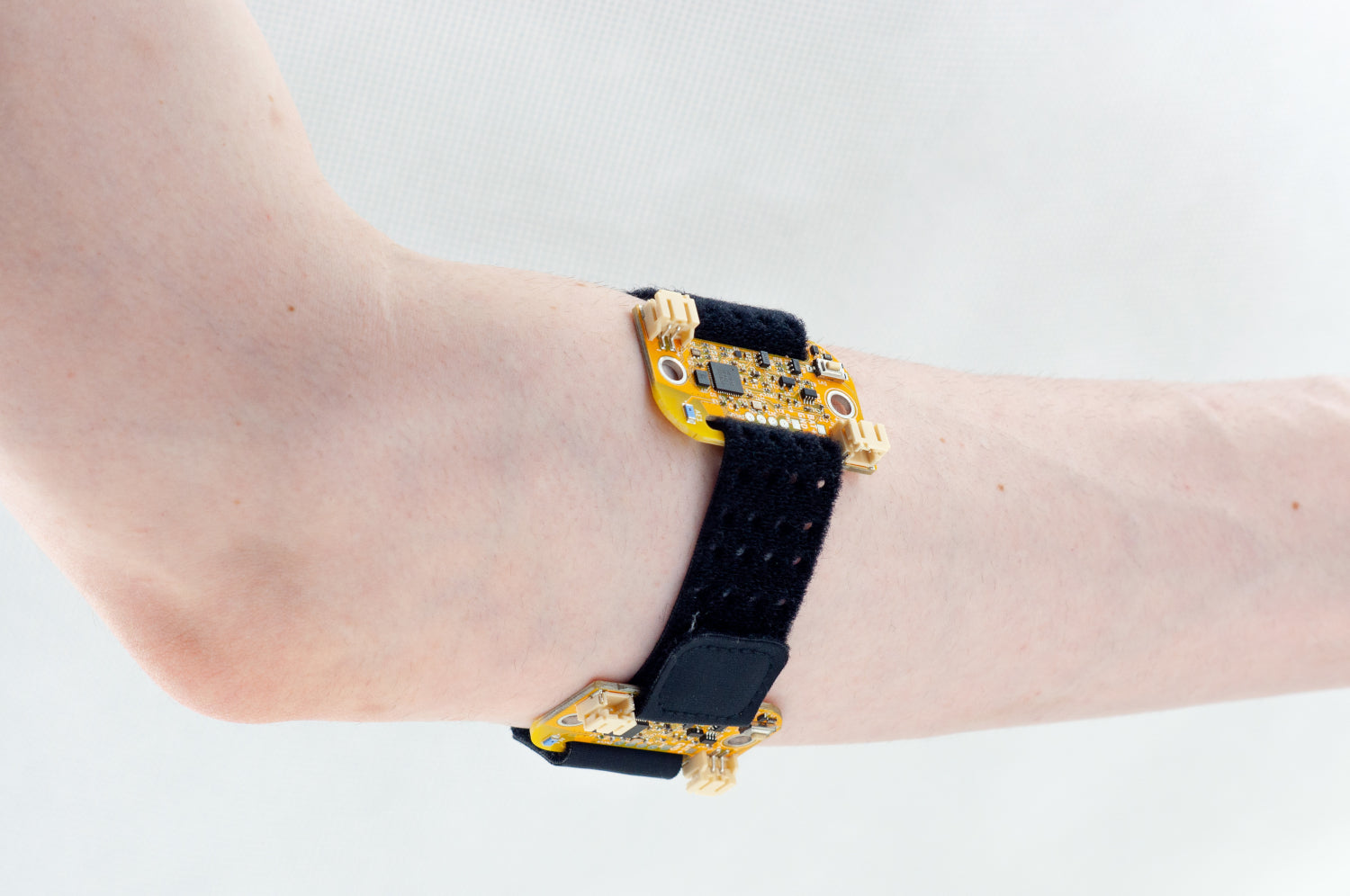
uMyo is an open source wireless EMG sensor that measures electrical muscle activity in real time. It has clear signal, low noise, low latency, and built-in IMU and magnetometer — all in a 9g wearable PCB.

As of March 2026, uMyo supports both BLE streaming via Android, USB base mode for direct PC connection, and nRF24 mode for Arduino projects. 

What people are using uMyo for:

  • Controlling prosthetics and exoskeletons
  • Scientific and academic research
  • Real-time gesture recognition
  • Muscle fatigue detection
  • Wearable sensing systems
  • Robotics and drone control
View full details

What is an EMG sensor?

EMG (electromyography) sensors, also called muscle sensors, allow to measure electrical muscle activity and are widely used for muscle rehabilitation, performance optimization, controlling augmentations (prostheses and exoskeletons), robots (from drones to hexapods), practical applications like guiding botox injections. EMG data is also used in research of muscle function, development of new technologies and equipment.

  • Three wireless modes

    Switch between modes with a button press. nRF24 mode (purple) for Arduino-compatible setups. Base mode (green) for full-bandwidth, multi-device streaming via USB receiver — the best option for high-throughput R&D. BLE mode (blue) connects to the Android app for cable-free PC streaming via WiFi, or broadcasts advertisement packets directly to ESP32 and BLE scanners — no bridge needed. All modes run on the open UF1 protocol.

  • Hybrid electrodes

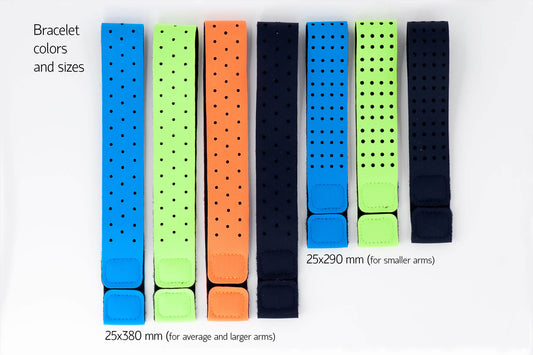
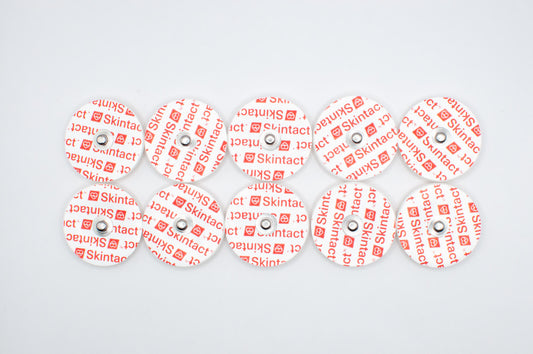
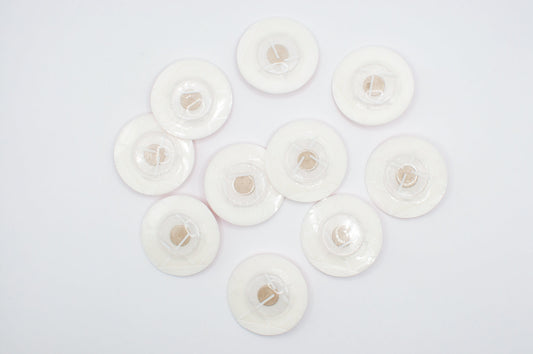
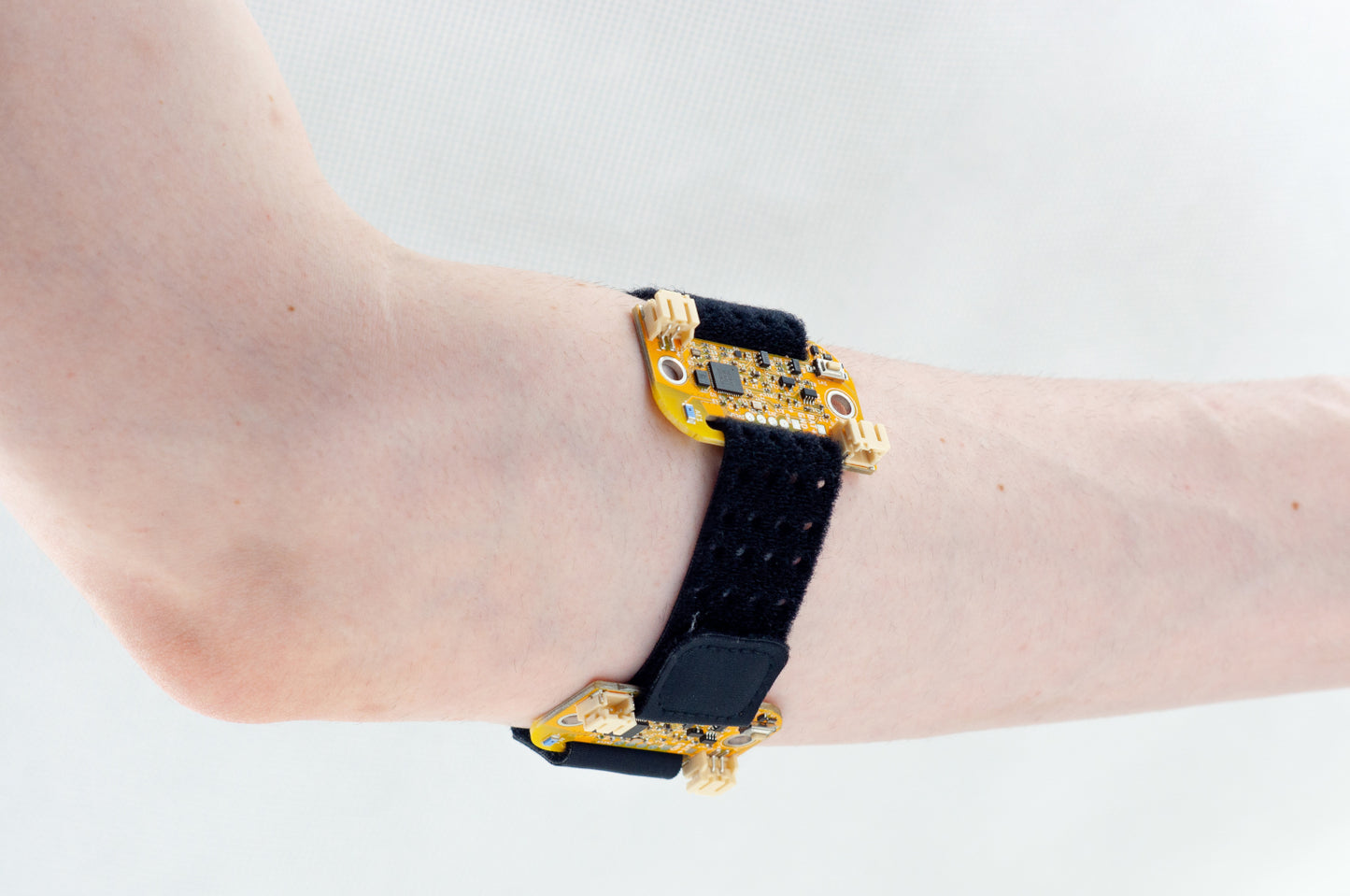
    Ships with dry metal electrodes and wet electrode snap buttons. Works with a bracelet for forearm use, classic gel electrode placement, or anywhere on the body — arms, legs, face — as long as there's muscle. Dry electrodes work well for most placements; wet/gel electrodes help with areas where skin contact is harder to stabilize.

  • Clean data, built-in motion

    Hardware filtering via AD8293 instrumentation amp, digital 50/60 Hz mains noise filter, and short circuit protection. Plus LSM6DSR 16-bit IMU and magnetometer on board — real-time 3D orientation alongside EMG, useful for motion-aware gesture recognition and biomechanics research.

Quick Start

Option A — BLE via Android (no extra hardware)
Requires Android 8+, uMyo with fw-ble or fw-ble-ota firmware.

Android app (APK): github.com/ultimaterobotics/umyo-android
Python workbench: github.com/ultimaterobotics/uf1-tools
Setup guide: make.udevices.io/guides/whats-new-march-2026

Option B — USB receiver base (direct PC)
Works on Linux, Windows, Mac. Recommended for multi-device setups and high-throughput research.

Python tools: github.com/ultimaterobotics/uMyo_python_tools
Arduino library (nRF24): github.com/ultimaterobotics/uMyo_RF24
Arduino library (BLE): github.com/ultimaterobotics/uMyo_BLE

Web workbench GUI with base mode support: coming soon — follow on roadmap

A demo with three uMyos where the EMG sensors are placed so that each finger signal is clear:

Specifications

  • Microcontroller: nRF52832 BLE SoC
  • Connectivity: BLE (via Android bridge) + nRF24 (USB base) — UF1 protocol
  • Operational amplifier: AD8293 with bias compensation
  • IMU: LSM6DSR 16-bit gyroscope/accelerometer
  • Magnetometer: yes
  • Mains noise filter: digital 50/60 Hz (auto-detects)
  • OTA firmware updates: yes (with March 2026+ bootloader/firmware, via Android app)
  • Short circuit protection: PTC resettable fuse
  • Antenna: 5dB chip antenna
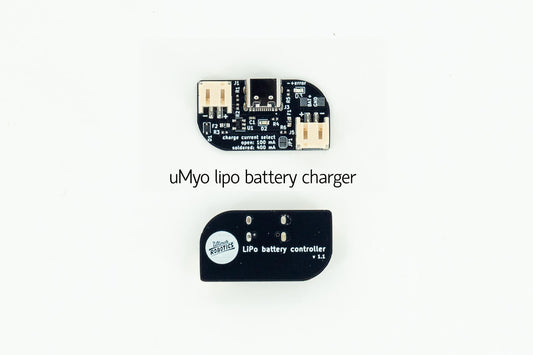
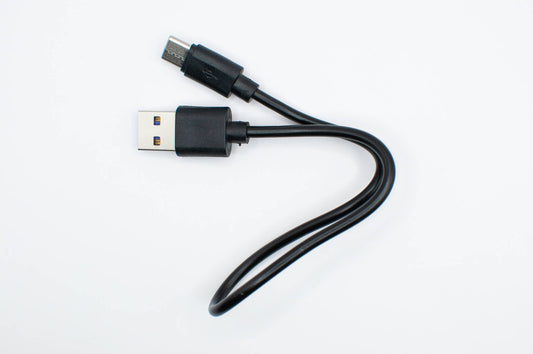
  • Charging: USB-C via separate LiPo charger PCB
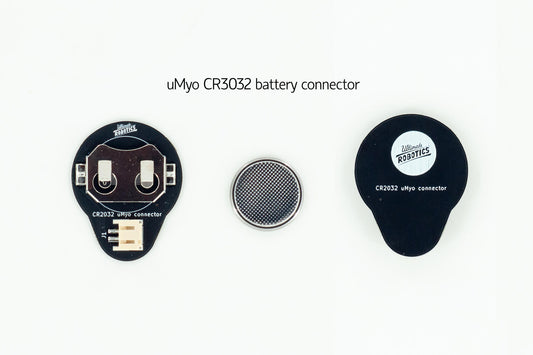
  • Power: LiPo (JST PH2.0) or CR2032 (low-power mode, LEDs off)
  • Daisy-chain: yes, multiple sensors via JST cables from single battery
  • Weight: 9g (sensor + dry electrodes)
  • Dimensions: 47×22×2.5mm (full thickness ~6.5mm with connector)

FAQ

What's in the package?

Each uMyo sensor comes with:
- 4x dry electrodes + 4x wet electrode buttons  
- 2x PH2.0 JST cables  

What can I do with one sensor?

You can measure activity of 1-3 muscles. It's usually enough to start working with EMG data and some gesture recognition.

How many sensors are needed to measure gestures/capture all five fingers?

We usually use 3 sensors for that.

Do you have any datasets to work with?

We don't have public datasets, but some of our Discord users collected their own (search by dataset in our Discord)

Can uMyos be used on arms, legs, face?

Yes, of course. You can measure muscle activity anywhere there's muscle as long as you can attach the sensors. You'll probably want to use the wet electrodes for some of the places, though.

uMyo powering options

uMyo EMG sensors can be daisy chained together with JST cables (PH2.0) to share power from a single LiPo battery.
LiPo batteries are not included because it's hard to ship batteries internationally, so you will have to get them yourself.

Where to buy batteries, and how to connect them?

You can use lipo batteries you have at hand, or buy a new one, just make sure the connector is correct (PH2.0mm 2P), or cut one of the cables you get with uMyo and solder it to a battery. You can also solder LIPO batteries to BAT+ and - on uMyo directly.

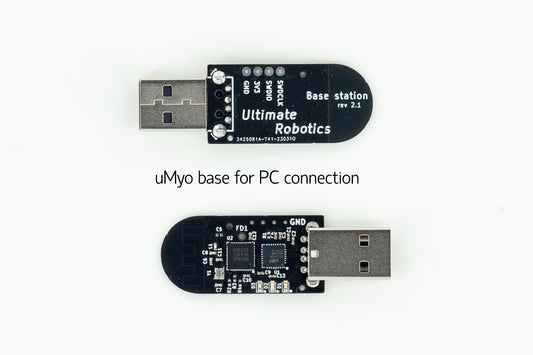
Do I need the USB base?

Not anymore. As of March 2026, uMyo streams via BLE to the Android app, which forwards data to your PC over WiFi — no receiver needed. The USB base is still the better option for research use: higher throughput, lower latency, multi-device, and works on any platform including iPhone. If you're doing serious R&D or need maximum data quality, get the base. If you just want to get started, BLE works.

What firmware does my device ship with?

New batch devices ship with the latest firmware including BLE and OTA support. See What's new — March 2026 for full details.

Why doesn’t the muscle activity LED work with CR2032 battery?

CR2032 mode is a low power mode, so LED is turned off for conserving energy.

The signal is too noisy (with dry electrodes)

Signal can be noisy due to unstable placement/movement - try pressing closer and stabilizing the bracelet/sensors. In some cases skin may be too dry, or too hairy. You don't need to shave hair though - try moistening skin a bit, with water is okay. Doesn't need to be visibly wet, your goal is to make skin just a little less dehydrated.